
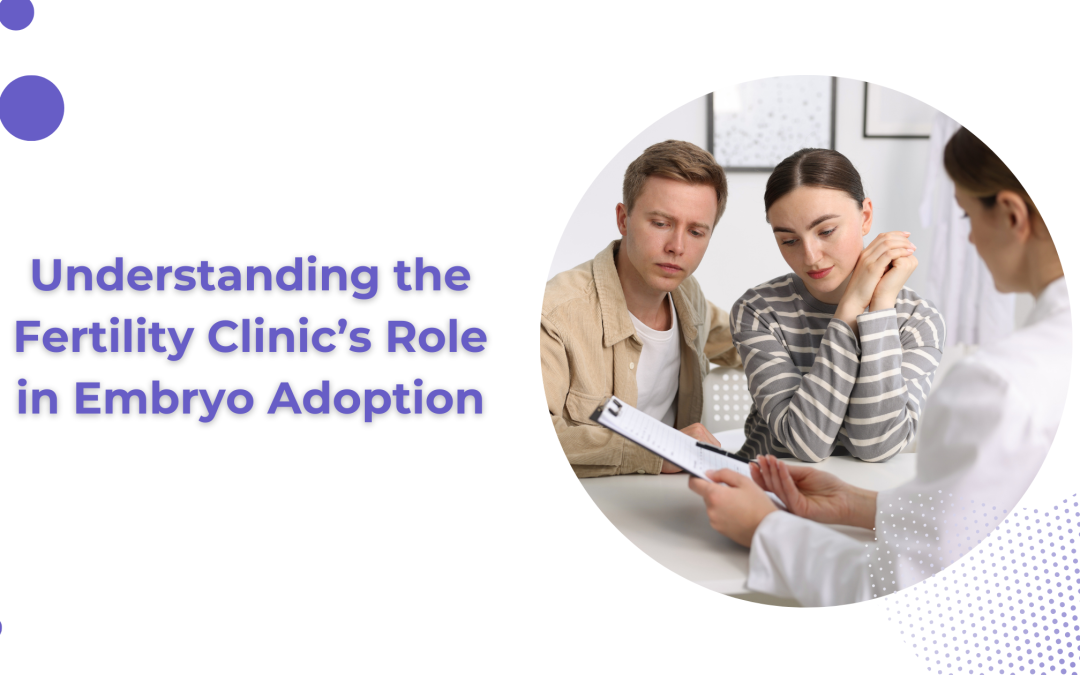
Whether you are planning to place remaining embryos or hoping to grow your family through embryo adoption, your fertility clinic plays a more central role than you may realize.
From medical oversight and documentation collection, to determining embryo eligibility and managing treatment cycles, clinics significantly influence what is possible, as well as how smoothly the journey unfolds and what the timeline will look like.
Adopting Embryos
For those hoping to adopt embryos, while many are familiar with the visible aspects of working with a fertility clinic–appointments, medication management, embryo transfer, and bloodwork–there is much more coordination happening behind the scenes, often occurring long before a match is finalized.
Each clinic has their own policies and regulations regarding which embryos they are able to accept and transfer, often depending on their laboratory capabilities. Embryo adoption agencies, such as Snowflakes, often have a process for determining what those regulations are. Prior to a match being made, clinics are contacted to confirm what type of criteria they have for adopted embryos. These discussions commonly involve factors such as age of the egg provider, the year of creation, the developmental stage of the embryos, the freezing method used, and the type of device or storage system the embryos were frozen on.
These criteria can greatly influence the matching process and may influence timing, as well as factor heavily into which clinic an adoptive family ultimately chooses.
Despite discussing criteria prior to matching, clinics will also be consulted once a match has been made, to ensure they are willing to accept the embryos. This involves taking a closer look at a specific set of embryos, rather than just providing general guidelines. This process looks different for every clinic, as some clinics may require a multistep process involving different teams or panels reviewing the records and approving or denying, while others may involve just the reproductive endocrinologist and embryologist reviewing and signing off. Depending on the clinic and protocol, this process can take anywhere from a few days to a few months.
Placing Your Embryos
For individuals with embryos remaining from previous IVF cycles, one of the first and most important steps in the process of placing embryos involves coordination with the fertility clinic where the embryos were originally created and stored.
Before embryos can be matched, detailed medical records must be obtained from the clinic and/or storage facility. At a minimum, these records include a cryopreservation summary (showing what embryos are remaining), embryology report, freeze/thaw protocol, and infectious disease testing results. If available, additional documentation such a genetic carrier screening results and PGT results are also collected.
These records are essential, as they help determine what embryos are available for adoption, as well as what clinics may be able to accept the embryos, thereby determining an agency’s ability to match the embryos.
The timeline for retrieving these records can vary widely depending on the clinic and how long ago the embryos were frozen. In cases where embryos were created ten or more years ago, records may be stored at an offsite location, which can extend the timeline. Each clinic has its own procedures, response times, and requirements, all of which can impact how quickly records are able to be retrieved.
Other Factors
Beyond record keeping, the embryo approval process, and of course the frozen embryo transfer (FET), clinics are also responsible for cryostorage and helping to facilitate transportation or shipment of the embryos. Regardless of whether you are placing embryos or adopting embryos, agencies will work with both the sending and receiving clinics to coordinate transporting the embryos once a match has been made. This process often involves completing consent forms for both facilities, working with a courier, and coordinating a timeline that is acceptable for all parties involved.
A Collaborative Process
In conclusion, embryo adoption is not a simple, one step event–it is a collaborative process involving agencies, clinics, couriers, legal professionals, and patients themselves.
Whether you are adopting embryos or placing them, understanding the clinic’s role can help you approach the process with clarity and confidence. While much of this work happens behind the scenes, its impact is profound – determining timelines, possibilities, and outcomes every step of the way.
To learn more about embryo adoption and donation, visit EmbryoAdoption.org.
Recent Comments